Darkroom vs Lightroom — No import needed
If you shoot on an iPhone, you already have a photo library. Darkroom is built on it. Lightroom is built on Adobe’s.
That’s the difference that actually changes how you edit. Darkroom opens onto the photos and videos already in Apple Photos — nothing to import, nothing to upload, no second catalog. Lightroom can now browse your Camera Roll, but the moment you edit, it copies that photo into Adobe’s library and typically up to Adobe’s cloud.
This post is for Apple photographers deciding whether that catalog is still worth it. We’ll be direct about where Lightroom is stronger — Windows, Android, Photoshop, generative AI — and where Darkroom is the better fit: a faster path from the library you already use to a finished photo, without a mandatory subscription. Try Darkroom free, or browse every comparison on our compare page.
Let’s start with the two apps, then the differences that actually change how you edit.
Darkroom
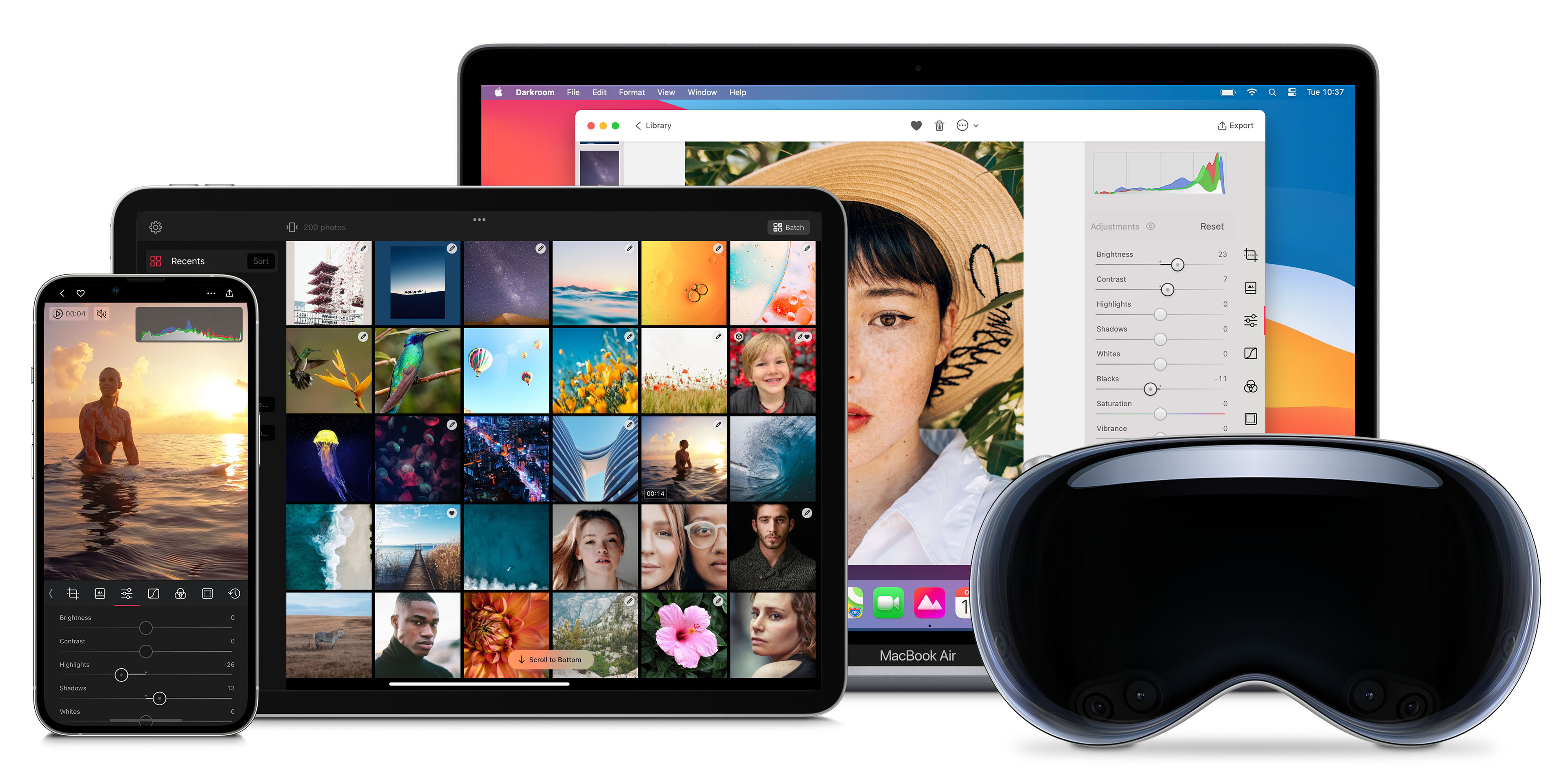
We’re a small, independent studio that’s been making a photo editor for Apple since 2015. The brief has never changed: professional tools that stay out of your way, on the devices you already carry. Apple recognized that with an Apple Design Award. Darkroom runs on iPhone, iPad, and Mac, and on Vision Pro with our iPad app. It reads your iCloud Photo Library directly, and includes a capable free tier — with Darkroom+ when you want to take an edit further.
Lightroom
When we say Lightroom here, we mean the cloud Lightroom that’s on iPhone, iPad, Mac, Windows, Android, and the web — not Lightroom Classic, the older desktop catalog app with local folders, tethering, and a denser interface. Both are Adobe products, both require an Adobe account, and both are sold only as a Creative Cloud subscription. There has been no one-time Lightroom license since Lightroom 6 in 2017.
Lightroom is a serious editor: decades of RAW profiles, excellent AI masking, generative tools, and a cloud catalog that follows you across every platform. If you already live in Photoshop, or you need Windows and Android, it is the default for a reason. The cost of that default is a separate library, a cloud you pay Adobe for, and a subscription with no off-ramp.
How do they compare?
Most editors can adjust exposure, color, and crop. What changes the experience is the path from the photos you already have to a finished picture. Here’s that path, starting with the differences that matter first.
Your photos, ready when you are
Darkroom never asks you to import. It is built directly on Apple Photos, so every photo and video you capture — Camera, Halide, Leica FOTOS, or any of our other camera integrations — is ready to edit the moment you open the app. Edits are non-destructive and live with the photo in your library. There is no second copy, and nothing to upload to us.
Lightroom is a catalog. You add photos into its library, and that library is what syncs through Adobe’s cloud. The Device tab on iPhone and iPad is a real improvement: you can browse Apple Photos without a manual import step. Adobe is explicit about what happens next, though — as soon as you edit, that photo is imported into Lightroom and queued for the cloud. You now have two copies, two homes, and an Adobe account sitting between you and the picture you just took.

That split is the lock-in. Lightroom edits live in Lightroom. Darkroom edits live in iCloud Photos, on every Apple device you own, without a migration, a catalog, or a cloud you didn’t already pay Apple for. If you’d rather spend the evening editing than importing, download Darkroom — your library is already there.
Pricing without a mandatory subscription
Lightroom is subscription-only. Adobe currently lists the Lightroom plan at $11.99/month in the US on an annual commitment (billed monthly), with 1TB of Adobe cloud storage included. The Photography plan that adds Photoshop is $19.99/month. There is no perpetual license, and the old $9.99 Photography plan with 20GB is closed to new customers.
Darkroom is free to download, with a real free tier. Darkroom+ is $39.99/year in the US — less than a third of Lightroom’s yearly price — or $9.99/month, or a $99.99 one-time Forever purchase. Family Sharing is included. You can try every Darkroom+ tool for as long as you like; a membership is only required when you export those premium edits.
Two other costs hide in Lightroom’s number. You’re paying for 1TB of Adobe cloud you may not need if your photos already live in iCloud. And you’re paying every year, indefinitely. Darkroom uses the library you already have, and the Forever plan is actually forever.
From capture to share, without breaking flow
Darkroom started on iPhone. The interface is built so you can cull and edit with your thumb: Flag and Reject advance you to the next photo, batch applies a look across a shoot, copy and paste brings over only the adjustments you want, and Frames will inset any crop on a Stories background sampled from the photo. Start on a phone, finish on a Mac — same tools, no handoff, because it’s the same library.
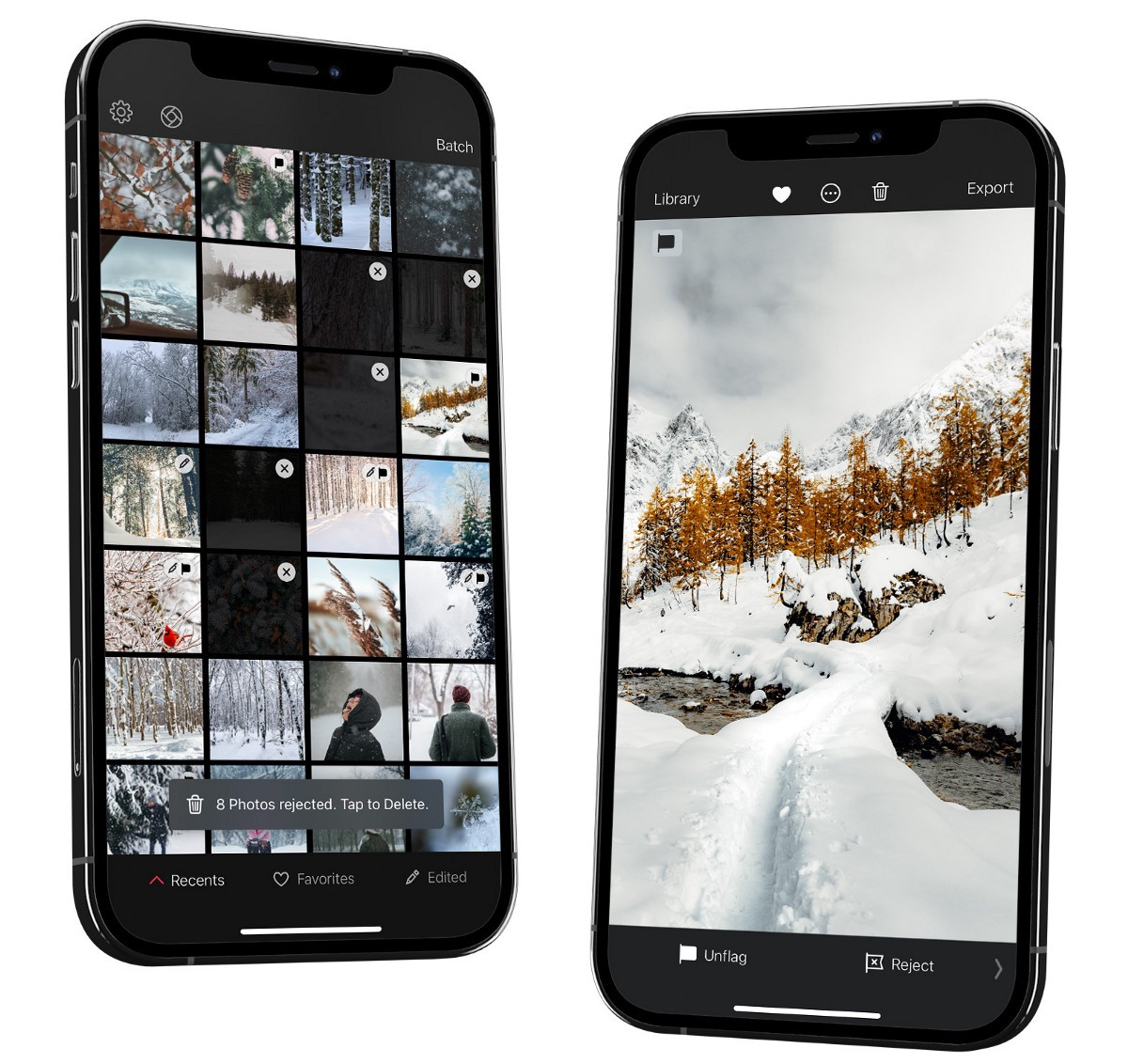
Lightroom’s mobile app is capable, but it still carries a desktop-catalog past: add photos, wait on cloud sync, then edit inside Adobe’s library. Culling a trip is slower when the photos aren’t yours until they’re imported. If you want to move through a Camera Roll at the speed you shot it, Darkroom is the workflow
Powerful tools, without the friction
You do not have to give up a serious editor to leave Lightroom’s catalog. Darkroom+ is curves, masks, color grading, Bloom & Halation, selective color, and 4K video — the same set we lead with on the home page and on Darkroom+. Try every tool free; pay when you export.
Lightroom is ahead in a few places we won’t pretend otherwise: generative remove, adaptive AI presets, and a round-trip into Photoshop. If those are central to how you work, stay. If you want photographic tools that feel fast on Apple devices, this is the kit.
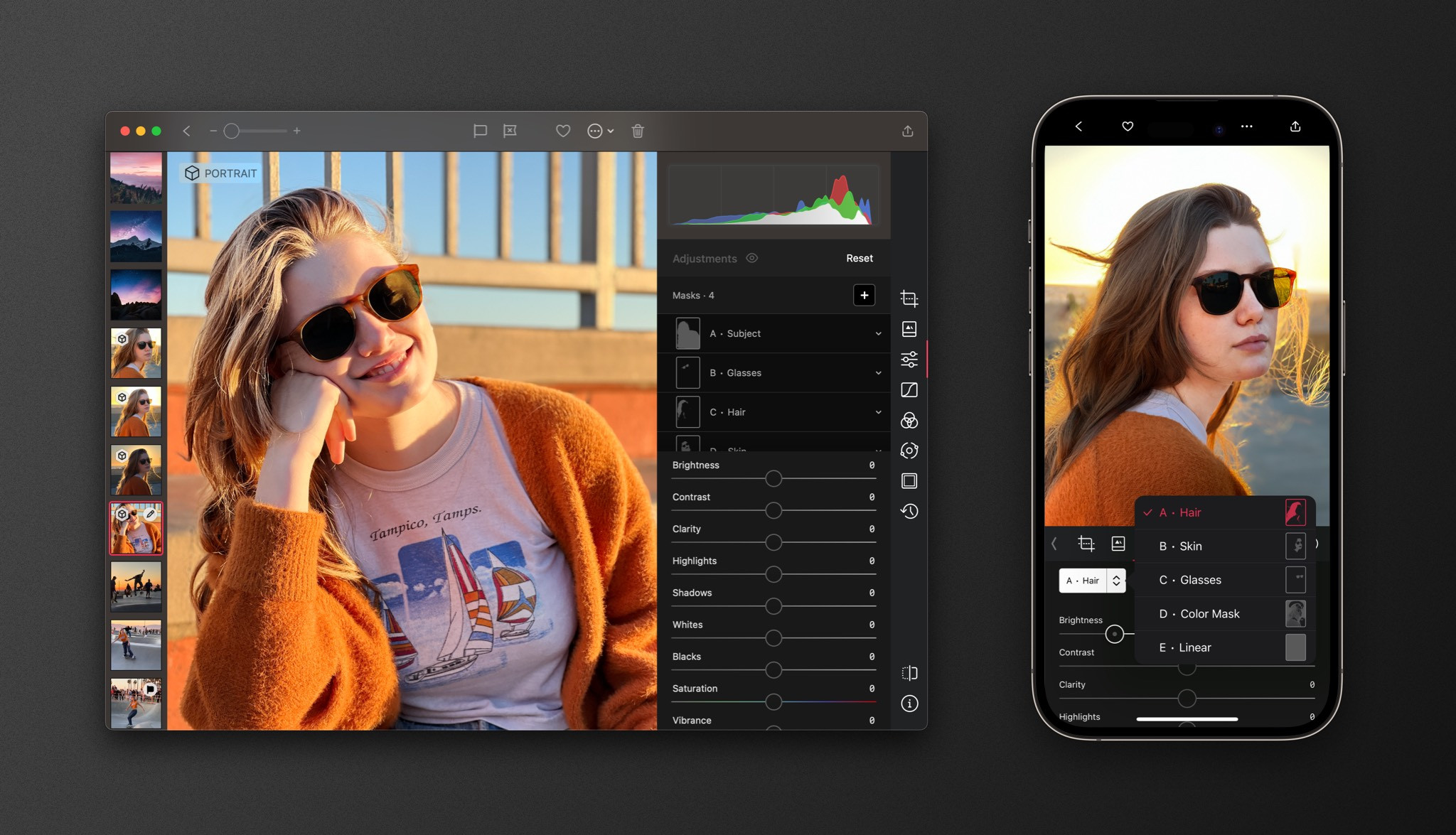
AI Masks — Select a subject, sky, skin, or hair in a tap, or build linear, radial, depth, luminance, and color-range masks. Lightroom’s AI masking is excellent; ours is built for the same job with fewer taps, and it runs on the photo already in Photos.
Color Grading — Separate wheels for shadows, midtones, and highlights, plus a global wheel when you want the whole frame to feel like a different hour of day. Lightroom has color wheels too. We think ours is the more compact, thumb-friendly take.
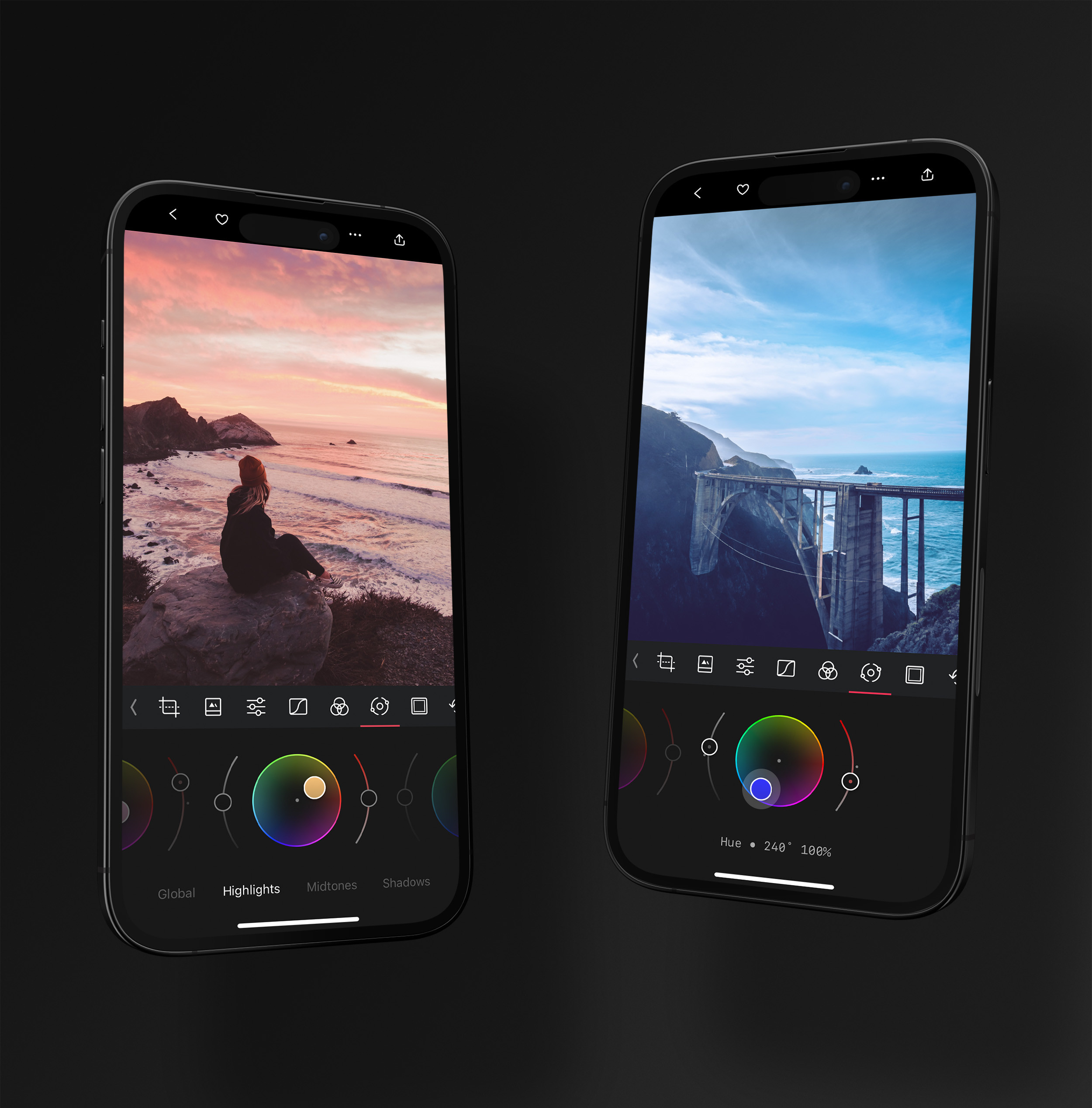
Curves — RGB curves, including per-channel, for the photographers who want to draw contrast by hand. This is a Darkroom+ tool, and it’s been in the app since the early days — not a checkbox.
Bloom & Halation — Vintage-lens glow and the warm red edge film gets around specular highlights. These are analog looks Lightroom does not ship as dedicated tools. If you chase a film-adjacent finish on digital files, this pair is a reason to open Darkroom.
Shadow & highlight recovery — Spatially aware recovery for JPEGs and RAWs, so lifting shadows does not drag the midtones with them. We put a lot of the company into this tool; it is not a renamed contrast slider.
Selective Color — Shift any hue without dragging the rest of the picture with it. Finishing tools in Darkroom+ also cover metadata and watermarks, so a photo can leave the app ready to publish.
Thousands of free community presets
Lightroom has Adobe’s own presets, a marketplace, and XMP import — a mature, file-based ecosystem. Darkroom’s bet is different: thousands of free community presets you can discover, search, and install with a link, inside the app and on the web. Save your own look once and it follows you across photos, video, and every device. No .xmp to email, no pack to manage.
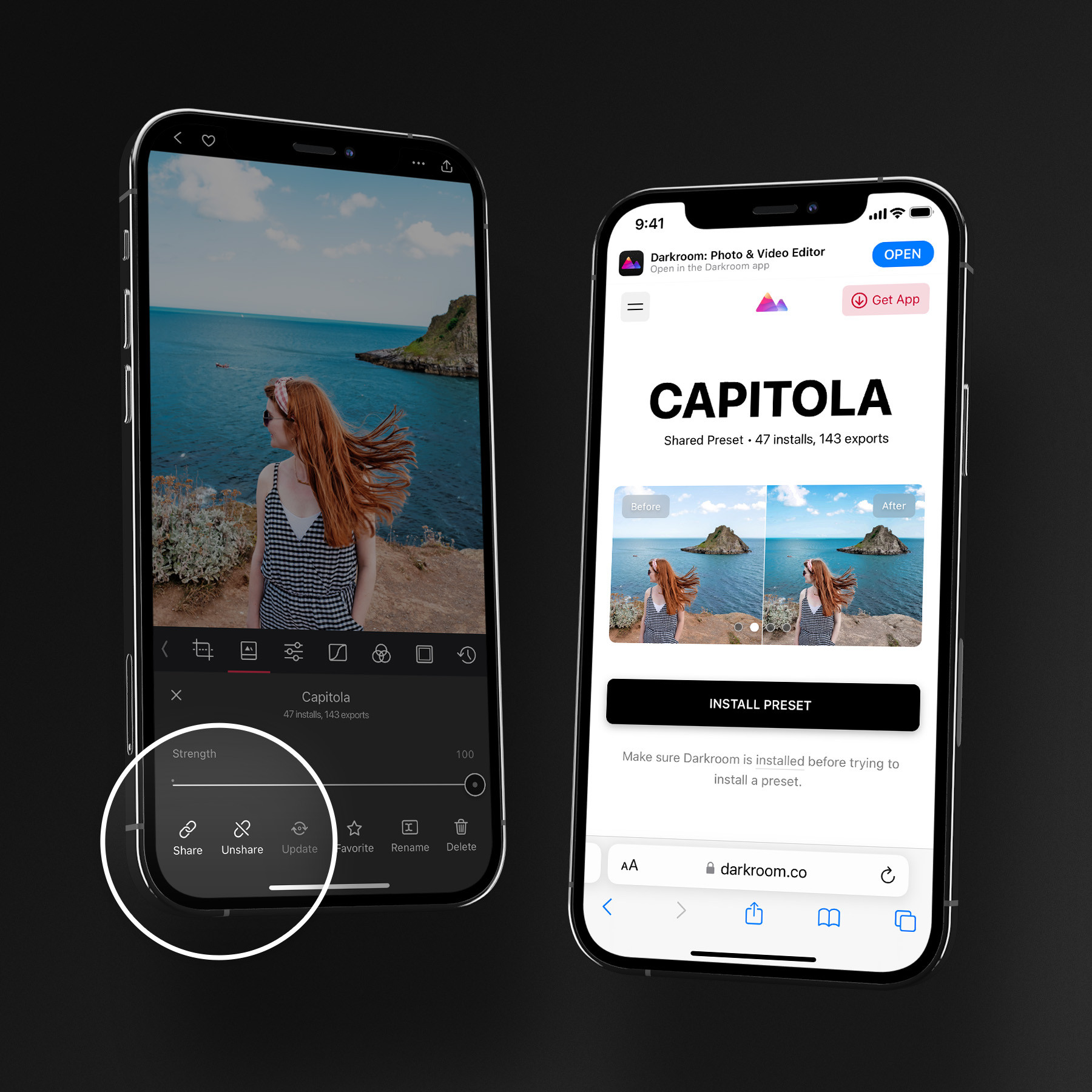
If you like to start from a look instead of a blank slate, this is often the moment people switch. Here are some of the most-used analog presets in Darkroom:
Photo and video in one flow
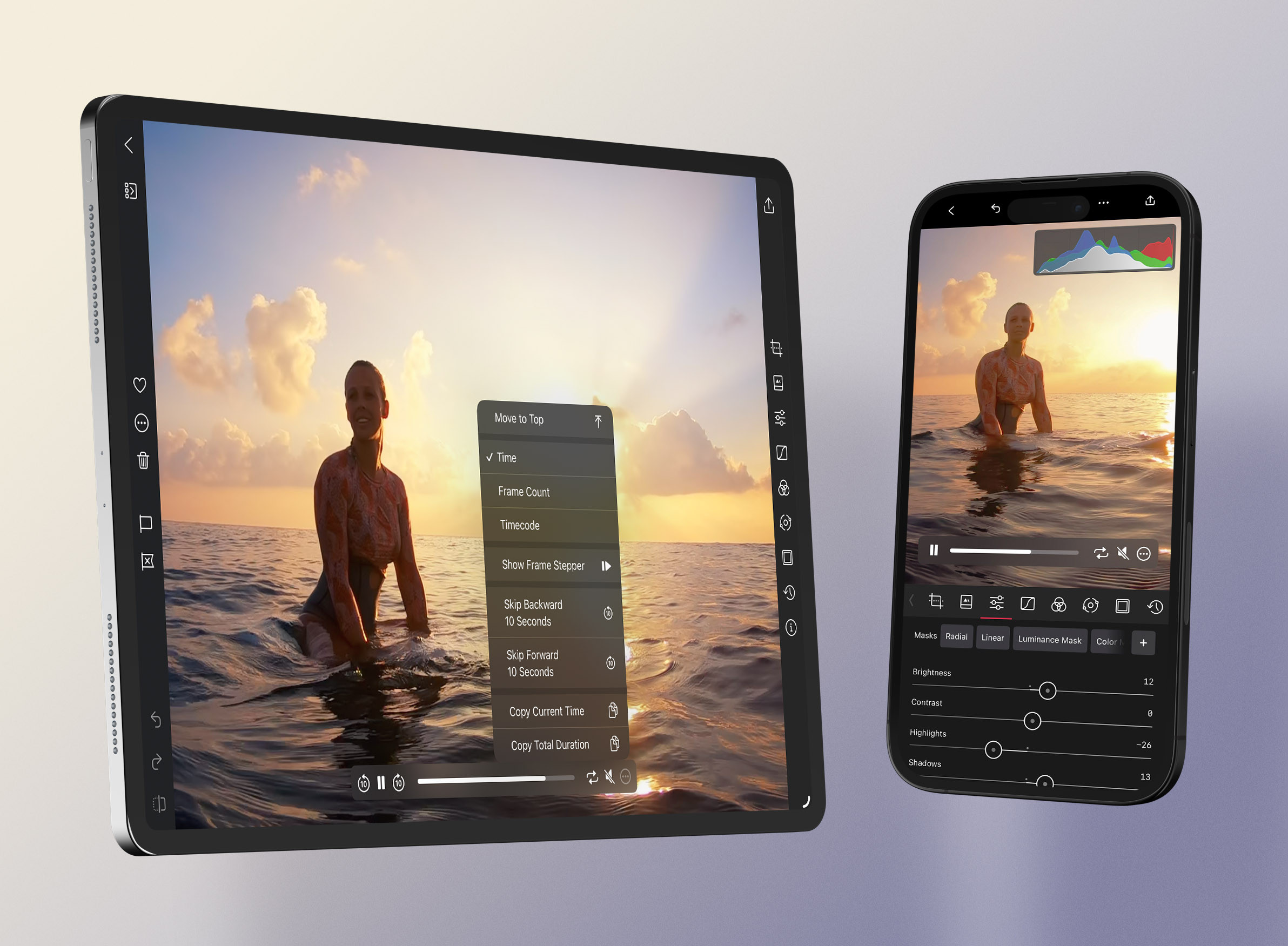
Darkroom uses the same tools on stills and motion: crop, tone, color grade, presets, frames, and export, including 4K. The clips are the ones already in Photos — Portrait, RAW, ProRAW, slo-mo, 4K, even 8K — not a separate video silo.
Lightroom can edit video now too, with color, presets, and grading in the cloud app. The catch is the same as stills: footage has to live in Lightroom’s library first. If you want one look across the photos and clips from a weekend, and you want that look on the files you already have, Darkroom is the simpler path. More on video in Darkroom.
RAW, ProRAW, and image quality
Lightroom has decades of camera profiles and a deserved RAW reputation. We don’t claim to have invented RAW conversion. We do claim that Darkroom 7’s rebuilt, fully lossless render engine — native Metal, built for Apple silicon — keeps large RAW and ProRAW files fluid, and lets Shadows and Highlights pull back more than a lossy pipeline will allow.
Both apps edit non-destructively. For photographers shooting iPhone, ProRAW, and Apple cameras, Darkroom delivers that fidelity inside the library you already use, without a catalog or an Adobe cloud original.
Privacy and whose cloud
Lightroom requires an Adobe account. The product is designed around syncing originals (or smart previews, in Classic) through Adobe’s cloud. That is a feature if you want Adobe’s catalog on every platform. It is also a copy of your photos on Adobe’s servers, counted against a storage quota you pay for.
Darkroom never uploads your photos to our servers. They stay in Apple Photos, on your devices and in your iCloud, under Apple’s account. We don’t need a Darkroom account to edit. If you’d rather not hand a second company your library in order to use a tone curve, that’s the difference.
Native to Apple
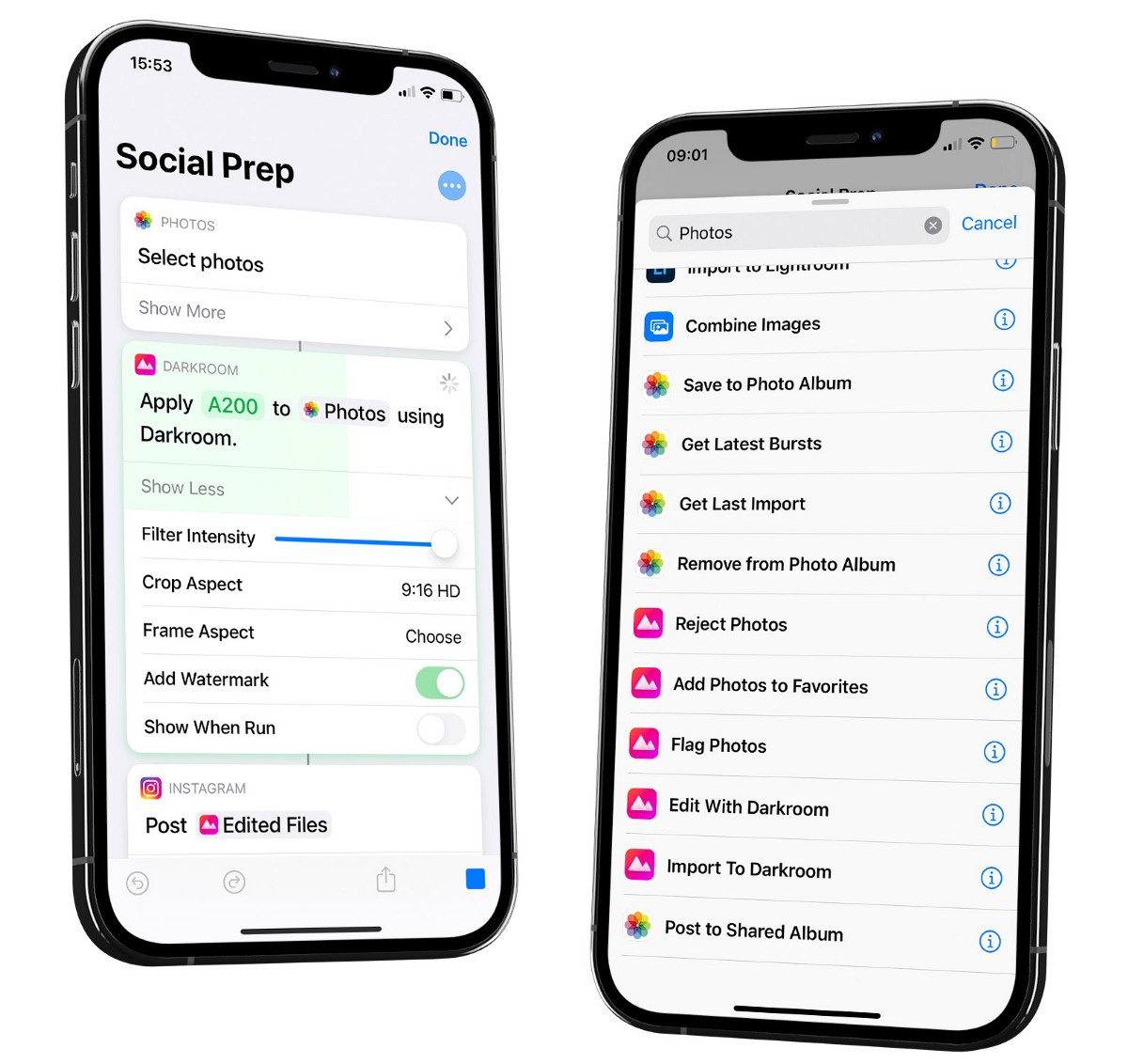
We started on iPhone, then iPad, then Mac, and we run on Vision Pro. Each version is built for that device: Metal rendering, Apple’s machine learning for masks, Siri Shortcuts for crop-frame-export without opening the editor, and the same Darkroom+ purchase across every device on your App Store account.
Lightroom’s cross-platform reach is the reason it exists in its current form. That reach is why it cannot be as native as an Apple-only editor. If you need Windows or Android, Lightroom is the answer. If you don’t, you shouldn’t have to edit like you do.
Darkroom compared to other photo editors
Lightroom is the comparison most people start with. If you’re weighing other apps, these guides go as deep — and the full set lives on our compare page.
Comparing Darkroom & Photomator
Explore the differences between Darkroom and Photomator, including their features, pricing, and overall user experience.

Comparing Darkroom & Capture One
See how Darkroom and Capture One compare, from RAW editing and pricing to workflow and platform support.

Comparing Darkroom & VSCO
Comparing Darkroom and VSCO, providing an overview of each app and their key differences, features, and pricing.
Comparing Darkroom & Snapseed
Explore the differences between Darkroom and Snapseed, including their features, pricing, and overall user experience.
Comparing Darkroom & Apple Photos
See how Darkroom and Apple Photos compare, and how Darkroom adds pro editing tools on top of the library you already use.

The verdict: which should you choose?
An honest split, the same one we use on our compare page:
- Choose Lightroom if you need Windows or Android, your work lives in Photoshop and Adobe’s catalog, you want generative AI and Firefly credits, or you manage a cloud library that has to follow you off Apple hardware.
- Choose Darkroom if you edit on iPhone, iPad, and Mac, you want professional tools on the photos you already have, you’d rather not import into a second catalog, and you want a free tier or a one-time purchase instead of a Creative Cloud subscription.
You don’t migrate a Lightroom catalog into Darkroom — and you don’t need to. Darkroom edits Apple Photos directly, so there’s nothing to import or upload. Lightroom’s edit history stays in Lightroom unless you export; that’s the low-risk trial. Download Darkroom for free and your whole library is ready in about two minutes.
Frequently Asked Questions
Is Darkroom a good Lightroom alternative?
Yes, if you edit on Apple devices. Darkroom covers RAW and ProRAW, masks, curves, color grading, presets, video, and batch — on top of Apple Photos, with a free tier or a one-time purchase. Lightroom remains the better fit for Windows, Android, Photoshop, and Adobe generative AI.
Do I need to import my photos to use Darkroom?
No. Darkroom is built on your Apple Photos library, so every photo is ready to edit instantly. Lightroom’s Device tab can browse Camera Roll, but editing a photo imports it into Lightroom’s catalog and typically uploads it to Adobe’s cloud. Lightroom on the desktop can also work with local files; the iPhone workflow this comparison is about still copies the photo into Lightroom.
Do I have to pay a subscription like Lightroom?
No. Lightroom is subscription-only. Darkroom is free to download, with Darkroom+ as a yearly or monthly membership or a one-time Forever purchase. You can try every Darkroom+ tool for free; a membership is only required to export those premium edits.
Is Darkroom free to try?
Yes. Download it from the App Store and start editing the photos already on your device. The free tier is capable, and Darkroom+ tools can be tried in the editor before you pay to export.
Does Darkroom support RAW and ProRAW?
Yes. Darkroom edits RAW from 600+ cameras and iPhone ProRAW, non-destructively. The rebuilt, fully lossless render engine in Darkroom 7 lets Shadows and Highlights recover more detail from those files.

